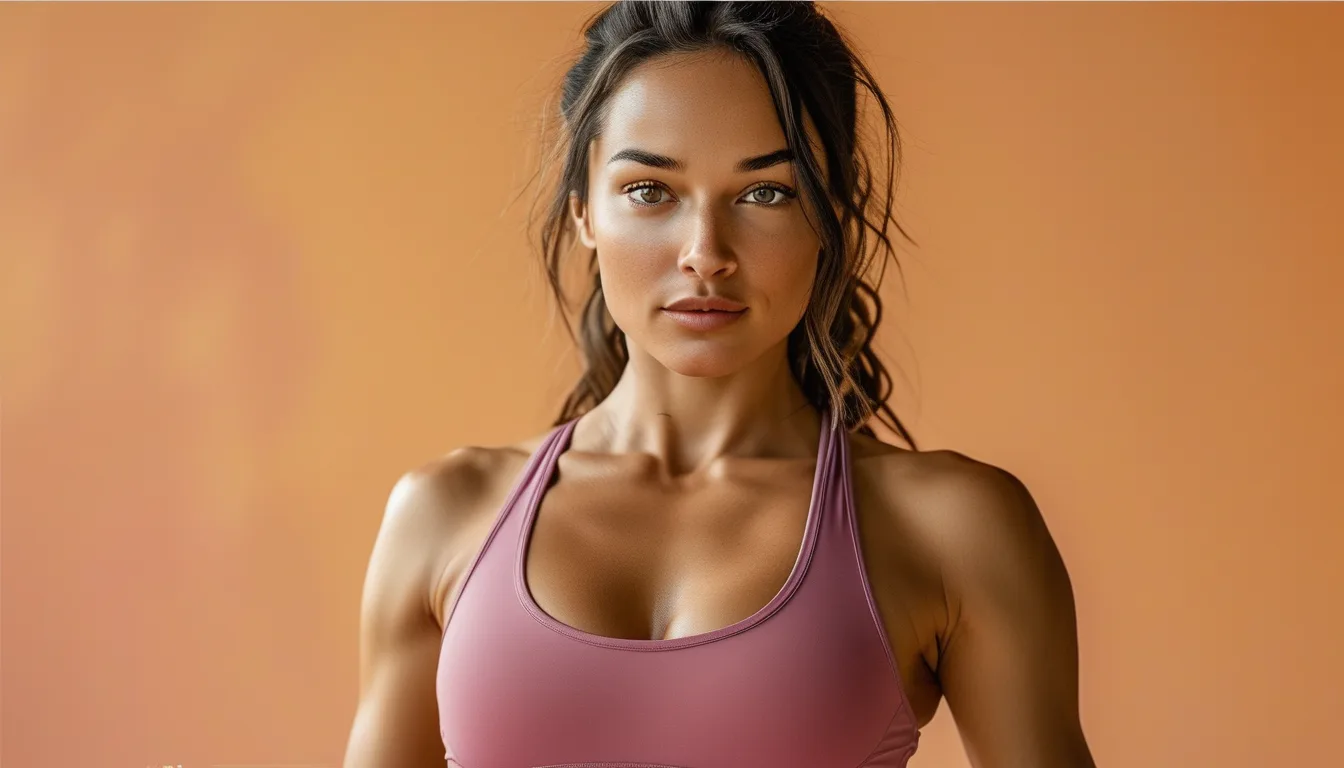
Why the Same Leggings Feel Perfect for Pilates but Wrong for HIIT
Quick Answer: Lower-intensity workouts like Pilates benefit from heavier, more structured fabric for shape and modesty during static poses, while high-intensity workouts need lighter, more breathable fabric for heat management — one fabric weight rarely serves both equally well.
The leggings that felt flawless during a slow Pilates flow turned into a sweaty, clingy mess halfway through a HIIT circuit. That’s not the leggings failing — it’s a mismatch.
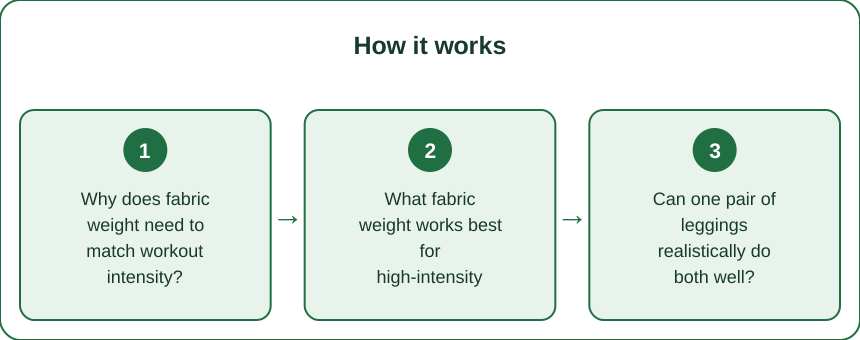
Why does fabric weight need to match workout intensity?
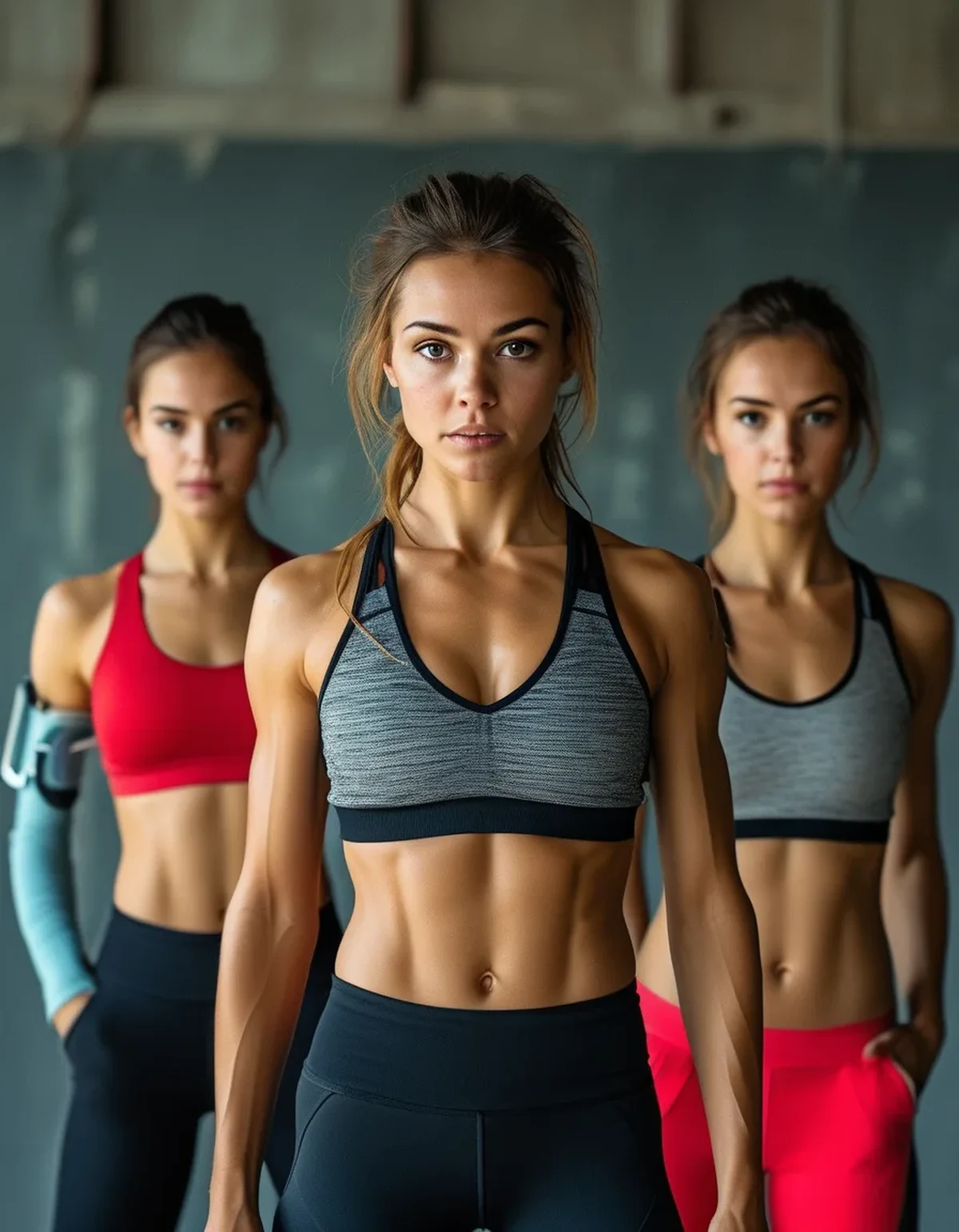
Lower-intensity, static-position workouts like Pilates or barre generate less heat and sweat, so heavier fabric (250+ gsm) provides better shape retention and opacity without much downside. High-intensity workouts generate significantly more heat and sweat output, and that same heavier fabric traps both, making it feel clingy and overheated much faster than a lighter, more breathable option would.
What fabric weight works best for high-intensity training?
Lighter fabrics (180-220 gsm) with more mesh paneling or perforated texture allow heat and moisture to escape faster, which matters significantly during sustained high-intensity intervals where core body temperature rises quickly. These fabrics sometimes sacrifice a bit of the smoothing, structured look that heavier fabrics provide, which is a reasonable trade-off for the activity type.
Can one pair of leggings realistically do both well?
Some newer hybrid fabrics attempt a middle-weight compromise, but true dual-purpose performance across very different intensity levels is genuinely hard to achieve, since the properties that help one activity (heavier compression, less airflow) work against the other. Owning at least one lighter pair for high-intensity days and one heavier pair for low-intensity days solves this more reliably than searching for a single perfect pair.
Does this same logic apply to sports bras and tops?
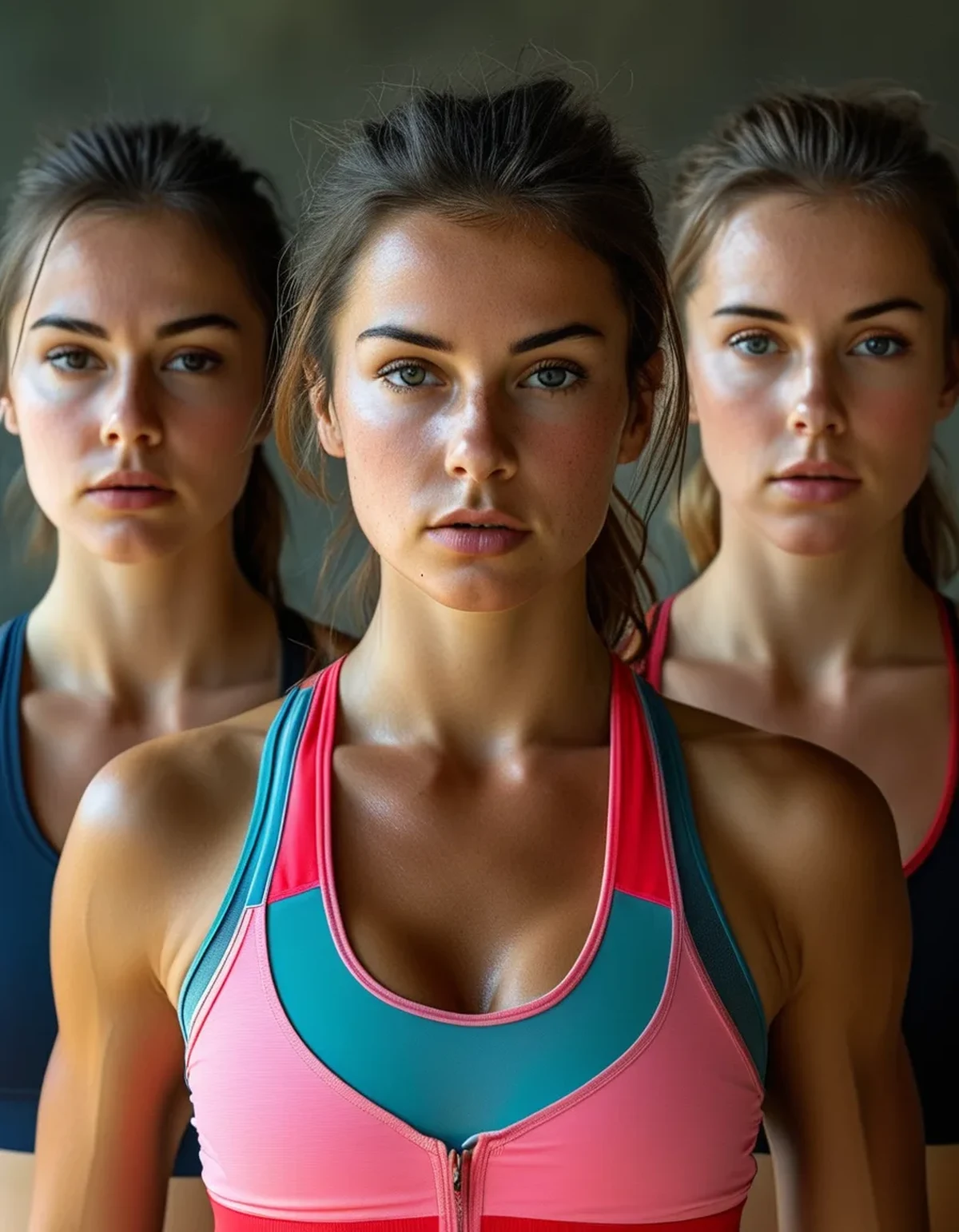
Yes — the same principle extends to sports bras and tops, where lower-impact activities can use heavier, more structured fabric for shape, while higher-impact or higher-heat activities benefit from more breathable, moisture-wicking material throughout the whole outfit, not just the leggings.
How can you tell fabric weight before buying?
Fabric weight (in gsm, grams per square meter) is sometimes listed in product specs, but when it’s not, checking for visible mesh panels, a slightly see-through quality when stretched, or reviews mentioning breathability are reliable proxies for identifying a lighter, high-intensity-friendly fabric versus a heavier, studio-oriented one.
FAQ: Activewear Fabric Weight Questions, Answered
Is heavier fabric always better quality?
Not necessarily — heavier fabric suits different purposes than lighter fabric, so ‘better’ depends entirely on matching it to the activity, not on weight alone.
Do mesh panels reduce durability?
Mesh panels can be slightly less durable at the seams over time compared to solid heavier fabric, but the airflow benefit for high-intensity training usually outweighs this minor trade-off.
Should I buy separate activewear for each type of workout I do?
If you regularly do both low- and high-intensity training, having at least one set of each fabric weight noticeably improves comfort compared to trying to make one pair work for everything.
TL;DR:
- Heavier fabric suits low-intensity, static workouts like Pilates
- Lighter, more breathable fabric suits high-intensity training
- One pair rarely does both equally well — consider owning both weights
- Check for mesh paneling or gsm specs as a breathability proxy
If your favorite leggings feel wrong in a new workout type, it’s likely a fabric weight mismatch, not a sign to get rid of them — just save them for the right session.
See It in Motion
Seen here: Super High Waist Embossed Yoga Leggings with Inner Pocket — shop it on bubblelime.com
Keep Reading
This article is for general informational and styling purposes only. Fit, sizing, and product availability may vary.