Why the Same Kit Feels Different for a 6am Session Than a 7pm One
Quick Answer: Your core body temperature swings roughly 1°C across the day, bottoming out in the early hours and peaking in the late afternoon. At 6am you start cold and warm slowly; at 7pm you start warm and overheat fast. The same kit therefore has to do opposite jobs — morning kit needs a removable warm layer, evening kit needs maximum breathability — and this gap widens sharply as late summer turns to autumn.
You bought the kit for evening classes and it was perfect. Then your schedule moved to mornings and suddenly you are cold for the first twenty minutes and clammy for the rest.
Nothing about the clothes changed.
Your body did — twice a day, every day, on a rhythm that has more effect on how kit performs than the weather does.
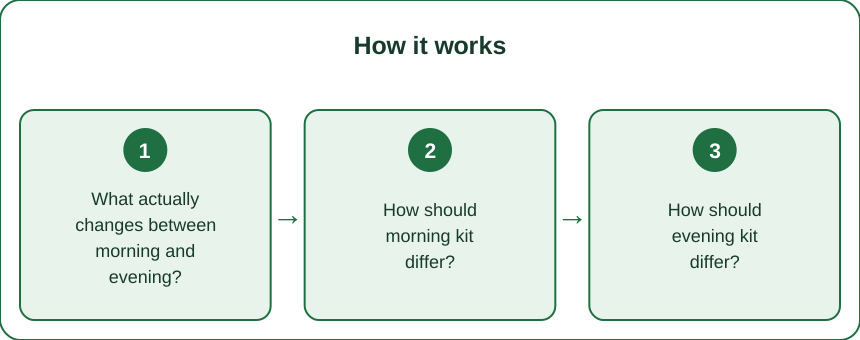
What actually changes between morning and evening?
Three things, and they compound.
Core temperature. It follows a daily rhythm, at its lowest around one to two hours before you normally wake and peaking in the late afternoon or early evening. That swing is small in absolute terms but large in perceived terms — you feel meaningfully colder at 6am than at 7pm in the same room.
Circulation to the skin. In the morning, blood flow to the extremities is reduced. Hands and feet are cold, and your body is slower to shed heat once you start working — which is why morning sessions often go from cold to too hot with almost no comfortable middle.
Ambient temperature. In late summer this is the biggest and most underestimated one. A 6am start now sits in genuinely cool air — often eight to ten degrees below the afternoon peak — while a 7pm session is still in the day’s residual warmth. The gap between morning and evening air widens through August and September, which is exactly when people notice their kit stops working.
Put together: the morning athlete is cold, poorly circulating and outdoors in cool air. The evening athlete is warm, well circulated and in warm air. The same t-shirt is being asked to do two entirely different jobs.
How should morning kit differ?
Build it around the first fifteen minutes and the ability to shed.
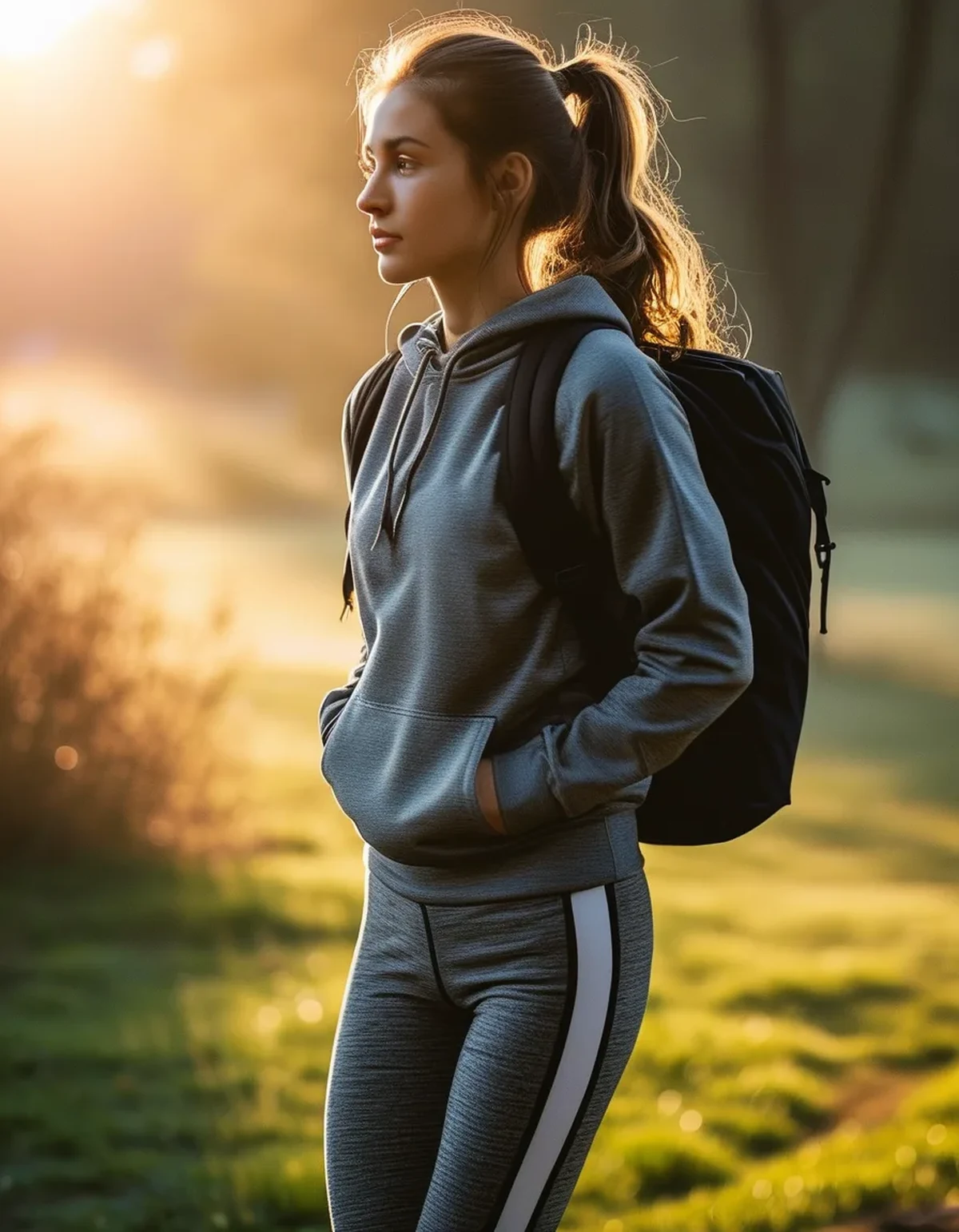
The principle: dress for ten minutes in, not for the moment you step outside. If you are comfortable walking out of the door in the morning, you are overdressed for the session.
What works:
- A removable outer layer, always. Lightweight, packable, and something you can genuinely carry or tie once you have removed it.
- Long sleeves on the base layer rather than a heavier fabric. Coverage warms the first fifteen minutes; weight overheats the last thirty.
- Extremities first. Light gloves and a headband do more for morning comfort per gram than any torso layer, because that is where the circulation deficit shows.
- Slightly heavier socks. Cold feet in the morning are a circulation issue, not an insulation issue, but insulation helps anyway.
What does not work:
- A single heavy top. No adjustment available. You are cold, then you are overheated, and there is nothing you can do at either end.
- Cotton anything. It holds the sweat you produce in minute twenty and turns it cold in minute forty.
The mistake most people make is buying warmer kit rather than more adjustable kit. Adjustability is the entire answer in the morning.
How should evening kit differ?
Build it around heat you cannot get rid of.
At 7pm you start warm, in warm air, with good circulation. You will reach your working temperature within minutes and then need to shed heat continuously for the rest of the session.
What works:
- Maximum breathability. Mesh panels, open knits, the lightest weight you own.
- Less coverage. This is the session for the crop, the shorts, the tank.
- Fabric with genuine moisture movement, since you will sweat more and earlier than in the morning.
- A layer for afterward, not during. The evening trap is the walk home, when you are wet and the air has cooled while you were inside. This is the layer people forget every single autumn.
What does not work:
- The morning’s long-sleeve base layer. It was doing a job at 6am and it is doing nothing but trapping heat at 7pm.
- Compression pieces if you run hot. They restrict evaporative cooling in exactly the conditions where you need it most.
The seasonal wrinkle: evening sessions in late summer stay warm during, but the walk home is getting steadily cooler week by week. Kit that was fine in July starts failing on the journey home in September — not during the workout at all.
5 mistakes people make when their training time changes
1. Keeping the same kit and blaming their fitness. A session that feels harder after a schedule change is often a thermal problem, not a fitness one. Being cold for the first fifteen minutes genuinely makes work feel harder.
2. Buying warmer rather than more adjustable. One heavy top solves nothing. A light base plus a removable layer solves both ends.
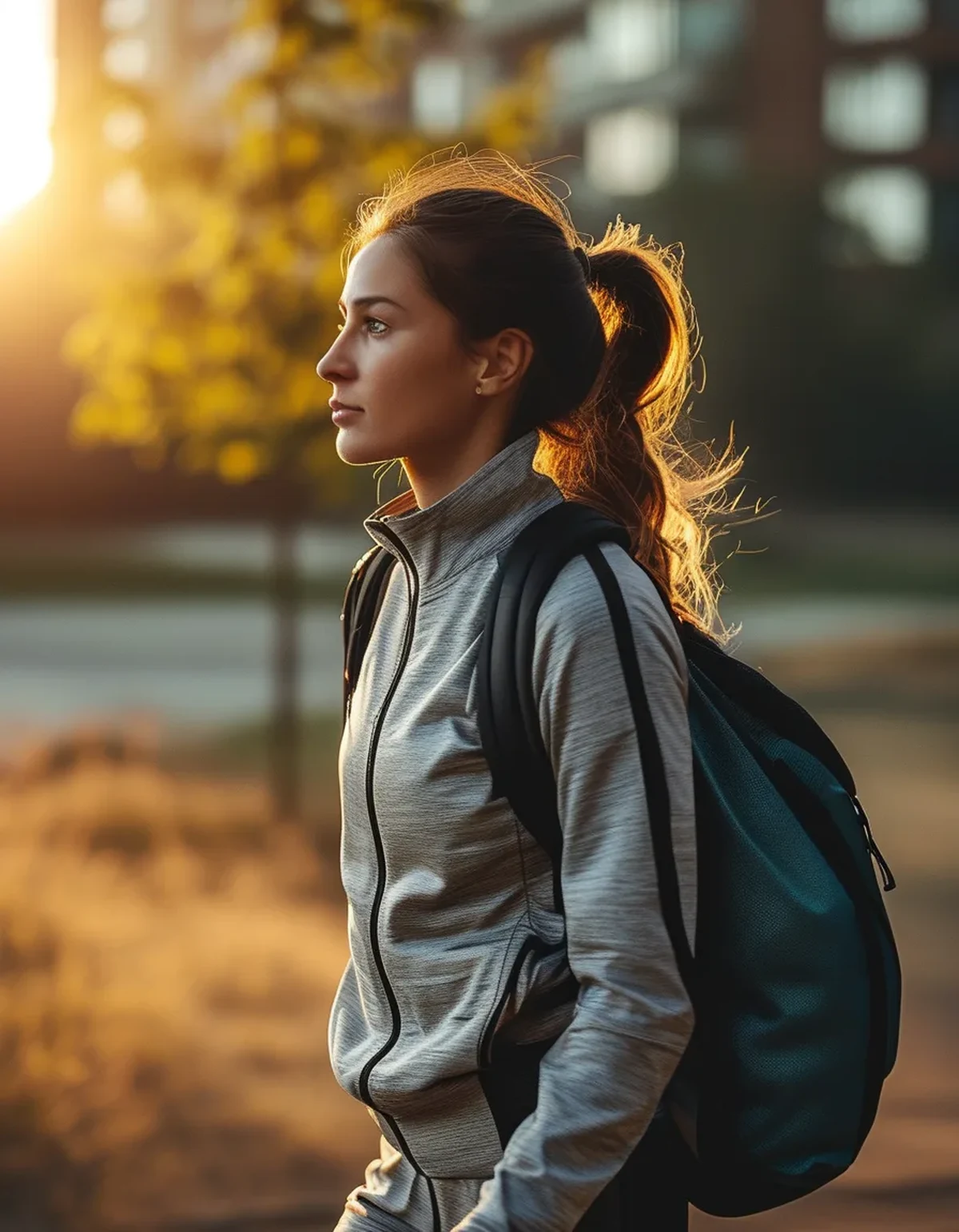
3. Ignoring the journey. The workout is thirty to sixty minutes; the total time outdoors including travel is often longer. The commute is where kit actually fails, in both directions.
4. Dressing for the forecast. Forecasts give you the daytime high. A 6am start is frequently much closer to the overnight low. Check the actual hourly temperature for your session time, not the day’s headline number.
5. Not owning a genuinely packable layer. The most common reason people overheat in morning sessions is that removing the layer means carrying something bulky, so they keep it on. A layer you can stuff into a waistband gets removed; a layer you have to carry does not.
The third one is the one that surprises people most — they optimise the workout and then spend twice as long uncomfortable getting to and from it.
Can you build one kit that works for both?
Partially, and the answer is layers rather than compromise garments.
The core that works at both ends:
- A light, breathable base — the piece you would wear alone at 7pm.
- Bottoms appropriate to the activity, which barely change between morning and evening.
- A packable long-sleeve or light jacket that lives permanently in your bag.
That is genuinely a two-session kit. The morning version is base plus layer, removed at fifteen minutes. The evening version is base alone, layer put on afterward for the walk home.
The one thing you cannot solve with layering is bottoms. Full-length leggings at 7pm in late summer are hot; shorts at 6am in late September are cold. If you train at both times regularly, this is the one place where owning two options genuinely pays for itself.
The autumn transition point to watch for: the first week where your morning session needs the layer for the full duration rather than the first fifteen minutes. That is your signal that summer kit has run out, and it usually arrives two to three weeks before people actually change anything.
FAQ: Morning and Evening Kit, Answered
Should I warm up longer for morning sessions?
Yes — noticeably. Cold muscles and reduced circulation mean the standard five-minute warm-up is inadequate at 6am. Ten to twelve minutes, building gradually, makes morning sessions feel dramatically better.
Why do I sweat more in the evening for the same effort?
Because you start closer to your peak core temperature and your body is already primed to shed heat. It is not extra effort or worse fitness — it is starting from a warmer baseline.
Is it worth having separate morning and evening kit?
For tops, no — layering handles it. For bottoms, yes, if you regularly train at both times. That is the one garment where the temperature difference cannot be solved by adding or removing something.
TL;DR:
- Core temperature swings across the day, so 6am you starts cold and 7pm you starts warm — same kit, opposite jobs.
- Morning kit needs adjustability: light base plus a genuinely packable removable layer, plus gloves and a headband.
- Evening kit needs breathability during and a layer for afterward — the walk home is where it fails.
- Dress for ten minutes into the session, not for stepping out of the door.
- Check the hourly temperature for your actual session time, not the day’s high.
The practical version of all this is one bag change: put a packable layer in permanently and stop taking it out. It solves the cold first fifteen minutes in the morning and the cool walk home in the evening, which between them account for nearly all of the discomfort people blame on their kit. Everything else is refinement.
See It in Motion
Seen here: High Waist Embossed Yoga Leggings with Side Pockets — shop it on bubblelime.com
Keep Reading
This article is for general informational and styling purposes only. Fit, sizing, and product availability may vary.