5 Signs Your Activewear Fabric Weight Is Wrong for Your Sport
Quick Answer: Signs of a fabric mismatch include feeling overheated in low-intensity classes, seeing through fabric during high-stretch moves, or feeling restricted during dynamic movement. Lighter, four-way stretch fabric suits high-intensity work; heavier compression fabric suits low-intensity, static holds.
You own one ‘good’ pair of leggings and wear them for everything from yoga to sprint intervals. If something’s felt slightly off in one type of workout but not another, the fabric weight is probably why.
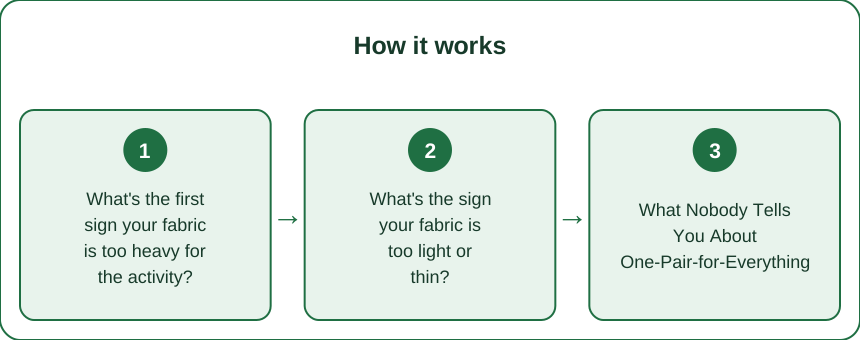
What’s the first sign your fabric is too heavy for the activity?
Overheating specifically during lower-intensity, longer-duration sessions — yoga, barre, pilates — often means your fabric is a heavier compression weight designed for high-intensity, shorter bursts rather than sustained, moderate movement. Heavier fabric traps more heat precisely because it’s built for support during explosive movement, not breathability during sustained holds.
If you find yourself needing to peel off a layer specifically during slower classes but not during HIIT, that’s a strong signal of this exact mismatch.
What’s the sign your fabric is too light or thin?
Visible see-through during deep stretches or squats in high-stretch, dynamic movement is the clearest sign your fabric is too thin for the stretch demands of that activity — lighter fabric prioritizes breathability over the fiber density needed to stay opaque under maximum stretch. This shows up specifically in classes involving lunges, deep squats, and floor work.
Thinner fabric is genuinely well-suited to low-stretch cardio like running or cycling, where it performs fine — the mismatch appears specifically when that same fabric meets high-stretch positions it wasn’t built for.
What Nobody Tells You About One-Pair-for-Everything
Most people buy one ‘good’ pair of leggings and use it across every activity type, assuming quality alone determines performance — but fabric weight is activity-specific by design, and even excellent leggings can underperform in the wrong context. A pair built for HIIT support can feel stiff and restrictive in a slow, deep-stretch yoga flow, and a pair built for yoga’s flexibility can feel unsupportive during sprint work.
Having two fabric weights — one lighter, four-way stretch pair and one heavier compression pair — covers the range most people actually need across a mixed workout week.
How can you check a legging’s fabric weight before buying?
Product descriptions listing ‘compression’ or ‘four-way stretch’ are useful signals — compression fabric runs heavier and suits high-intensity, dynamic support, while four-way stretch prioritizes flexibility and breathability for varied movement. Fabric weight (often listed in GSM, grams per square meter) is a more precise number when available — higher GSM means heavier, more opaque, more supportive fabric.
In-store, a simple stretch-and-check test (pull the fabric taut and look for see-through) tells you quickly whether a pair suits deep-stretch activities before you commit.
FAQ: Activewear Fabric Weight Questions, Answered
What fabric weight is best for running specifically?
Lighter, breathable four-way stretch fabric generally performs best for running, since the stretch demands are lower than yoga but airflow matters more than in short, explosive training.
Should I own multiple fabric weights if I only do one type of workout consistently?
Not necessarily — if your routine is consistent, one well-matched fabric weight is enough; the mismatch problem mainly affects people doing varied workout types.
Does higher GSM always mean better quality?
Not better, just different — higher GSM means heavier and more supportive, which is only an advantage for the activities that actually need that support.
TL;DR:
- Overheating in slow classes often means your fabric is too heavy for that activity
- See-through during deep stretches means your fabric is too thin for high-stretch movement
- One pair rarely suits every activity type well
- Checking for GSM or compression vs four-way stretch labeling helps match fabric to activity
If your “go-to” leggings feel slightly wrong in specific classes, it’s likely the fabric weight, not the fit or the workout itself.
See It in Motion
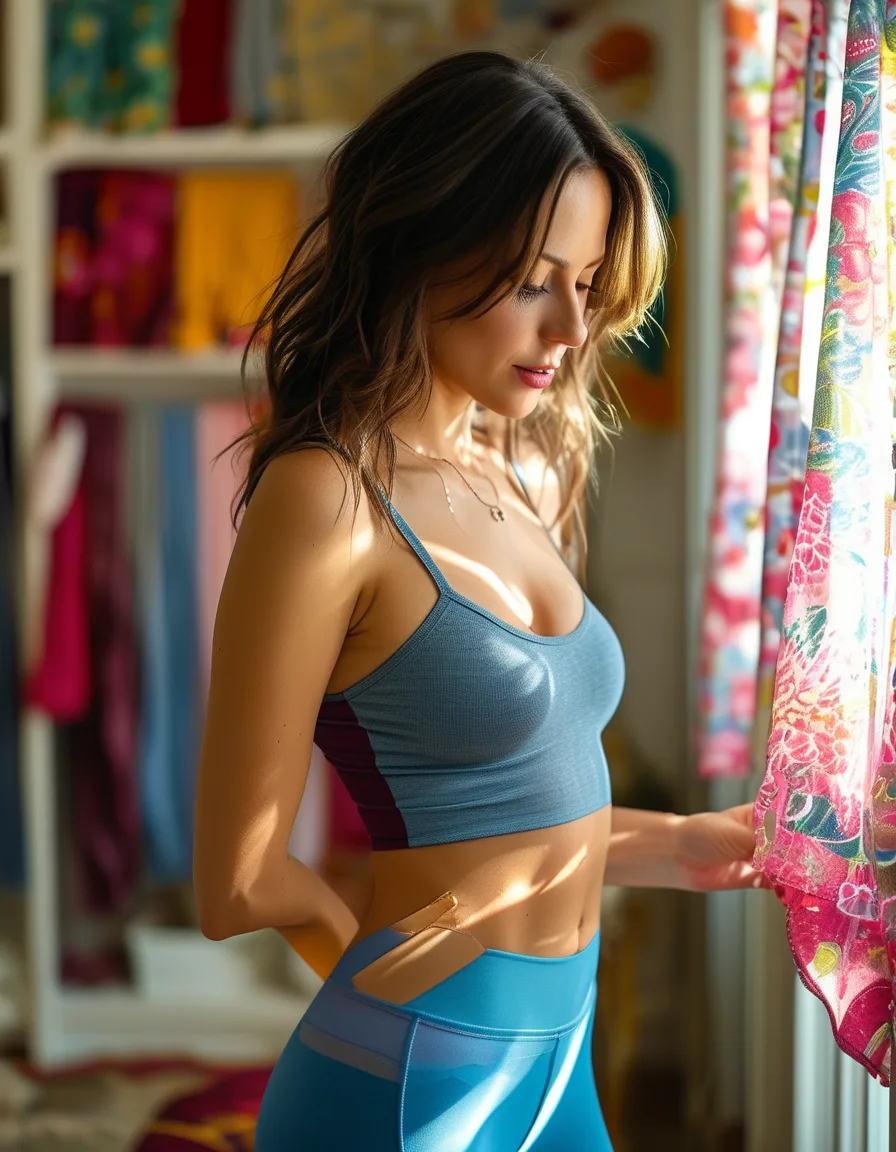
Seen here: High Waist Yoga Leggings with Side Pockets — shop it on bubblelime.com
Keep Reading
This article is for general informational and styling purposes only. Fit, sizing, and product availability may vary.