Do You Need New Activewear, or Just a Proper Wash Reset?
Quick Answer: Synthetic activewear accumulates a film of body oils, fabric softener, and detergent residue that traps odour bacteria and blocks moisture wicking. That film causes most of the smell-instantly, feels-clammy, stops-wicking complaints - and it washes out. Try a stripping wash before replacing anything. What does not come back is elasticity, opacity, and pilling - those are genuine end-of-life signs.
Most activewear is retired years early for a problem that is chemical, not structural.
One wash usually tells you which one you have.

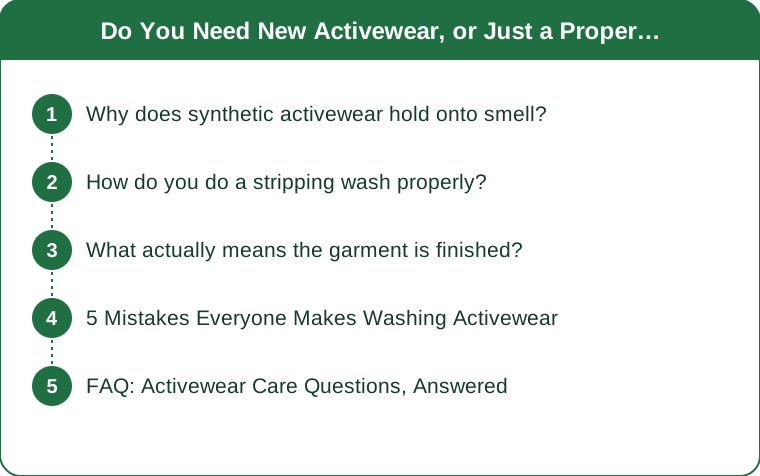
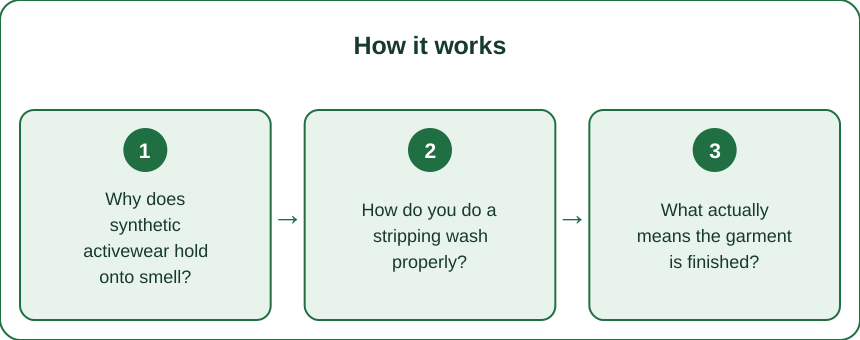
Why does synthetic activewear hold onto smell?
Because of what the fibres are made of and what has been deposited on them.
Polyester is oleophilic - it attracts and holds oil. Body oils bind to synthetic fibres far more readily than to cotton, and standard washing at low temperatures does not fully remove them. The oil stays, and odour-producing bacteria feed on it.
Fabric softener makes it substantially worse. Softeners work by coating fibres with a waxy layer, which traps oils underneath, blocks moisture from being wicked away, and gives the fabric that slick, water-repellent feel. Fabric softener should never touch technical fabric - and it is the single most common cause of ruined activewear.
Too much detergent leaves its own residue. Detergent that does not fully rinse out builds up over time, and that build-up holds odour just as effectively as body oil.
Which is why the smell appears instantly when you sweat. The bacteria are already resident in the fibre; fresh moisture and warmth just wake them up. A garment that smells clean in the drawer and awful five minutes into a workout is the signature of this problem.
And it explains why more washing does not fix it. Adding more of the same detergent to a residue problem adds residue. The cycle only breaks with a different kind of wash.
How do you do a stripping wash properly?
Simply, with things you probably already have, and no more than every couple of months.
Wash the items first, with normal detergent and no softener. You are stripping clean clothes, not dirty ones.
Then soak them in hot water with a stripping mix. A common approach is a large tub or bath of the hottest water the care label permits, plus a scoop of washing soda, borax if you have it, and a small amount of powdered detergent. Stir, submerge, and leave for four to six hours, agitating occasionally.
Expect the water to change colour. It typically goes grey or brown, which is the accumulated residue coming out. This is the part people find genuinely convincing.
Then run them through a rinse cycle with no detergent and air dry.
An easier alternative for smell specifically: a white vinegar soak. One part vinegar to four parts cold water for an hour, then wash normally. It breaks down alkaline residues and is gentler on elastane than a hot strip.
Check the care label for temperature limits before anything hot. Elastane is heat-sensitive, and a strip wash that exceeds the label will cost you the stretch you were trying to preserve.
And do not do this often. Once every couple of months at most - it is a reset, not a routine.
What actually means the garment is finished?
Four things, none of which a wash can reverse.
Lost elasticity. If the waistband no longer returns, the legs bag within an hour, or the garment no longer holds its shape after a rest and a wash, the elastane is spent. This is usually heat damage from a dryer and it is permanent.
Reduced opacity. Fabric thins with wear and washing, particularly at the seat and the back of the knees. The bend-over test in daylight is the only reliable check - and if it fails, no wash restores it.
Pilling and fabric thinning. Pills can be removed with a fabric shaver, which genuinely improves appearance, but heavy pilling indicates the fibre surface is breaking down. Thinning at high-friction points is the end.
Persistent smell after a proper strip. If a full stripping wash does not remove the odour, the bacteria have colonised the fibre structure deeply enough that they are not coming out. This is the honest end point for a synthetic garment.
And a fifth that is a fit issue rather than a wear one: it never fitted properly. No wash fixes a waistband that always rolled or a strap that always dug in.
Everything else - slickness, clamminess, smelling on contact with sweat, poor wicking - is residue. Try the wash first.
5 Mistakes Everyone Makes Washing Activewear
Using fabric softener. The biggest one by far. It coats the fibres, blocks wicking, traps oil, and permanently changes how the fabric feels. Nothing else on this list does as much damage.
Using too much detergent. More detergent does not mean cleaner; it means more residue, and residue is the actual problem. Use roughly half what the packet suggests for a load of synthetics.
Machine drying. Heat permanently damages elastane, and damaged elastane is bagging, sagging, and lost compression. This is the single fastest way to shorten the life of a good pair of leggings.
Leaving sweaty kit balled up in a bag. Warm, damp, and dark is ideal for bacterial growth, and a few hours in a gym bag can do more odour damage than a whole workout. Hang them out as soon as you get home - even unwashed.
Washing at too low a temperature every single time. Cold washing protects elastane but is less effective at removing body oils. An occasional warmer wash within the care label limits is a reasonable compromise, alongside a periodic strip.
And the bonus mistake: turning to antibacterial sprays. They mask the smell temporarily and add another layer of residue to the fibre. They treat the symptom and worsen the cause.
FAQ: Activewear Care Questions, Answered
How often should I strip wash?
Every two to three months for frequently used items, or whenever the smell starts appearing during workouts rather than after. Doing it monthly is unnecessary and adds cumulative stress to the elastane.
Will vinegar damage my leggings?
Diluted white vinegar in a cold soak is generally safe for synthetics and is much gentler than a hot strip. Do not combine it with bleach, do not use it on wool or leather trim, and rinse thoroughly. Spot test anything with a printed or coated finish.
Does an antibacterial or odour-control finish wear off?
Yes, over time and with washing - and fabric softener blocks it while it is still present. A garment marketed as odour-resistant that started smelling after a year has usually lost the finish, and a strip wash will help but will not restore it.
TL;DR:
- Most activewear problems are residue, not wear - body oils, softener, and detergent build-up trap odour and block wicking.
- Fabric softener is the single worst thing you can put on technical fabric.
- Strip wash occasionally with washing soda and hot water within the care label, or soak in diluted vinegar for a gentler version.
- Genuine end of life: lost elasticity, lost opacity, heavy pilling, or smell that survives a strip.
- Never machine dry, halve the detergent, and never leave kit in the bag.
Before you buy replacements, strip wash the pile you were about to retire. The colour of the water usually settles the argument.
See It in Motion
Seen here: High Waist Yoga Leggings with Side Pockets — shop it on bubblelime.com
Keep Reading
This article is for general informational and styling purposes only. Fit, sizing, and product availability may vary.