Why the Wrong Fabric Weight Is Probably Sabotaging Your Workout Comfort
Quick Answer: Activewear fabric weight (measured in GSM — grams per square meter) needs to match activity intensity: lightweight (under 180 GSM) for high-heat cardio, midweight (180-280 GSM) for general training, and heavier (280+ GSM) for low-intensity or cold-weather wear — mismatching weight to activity is a common, invisible cause of discomfort.
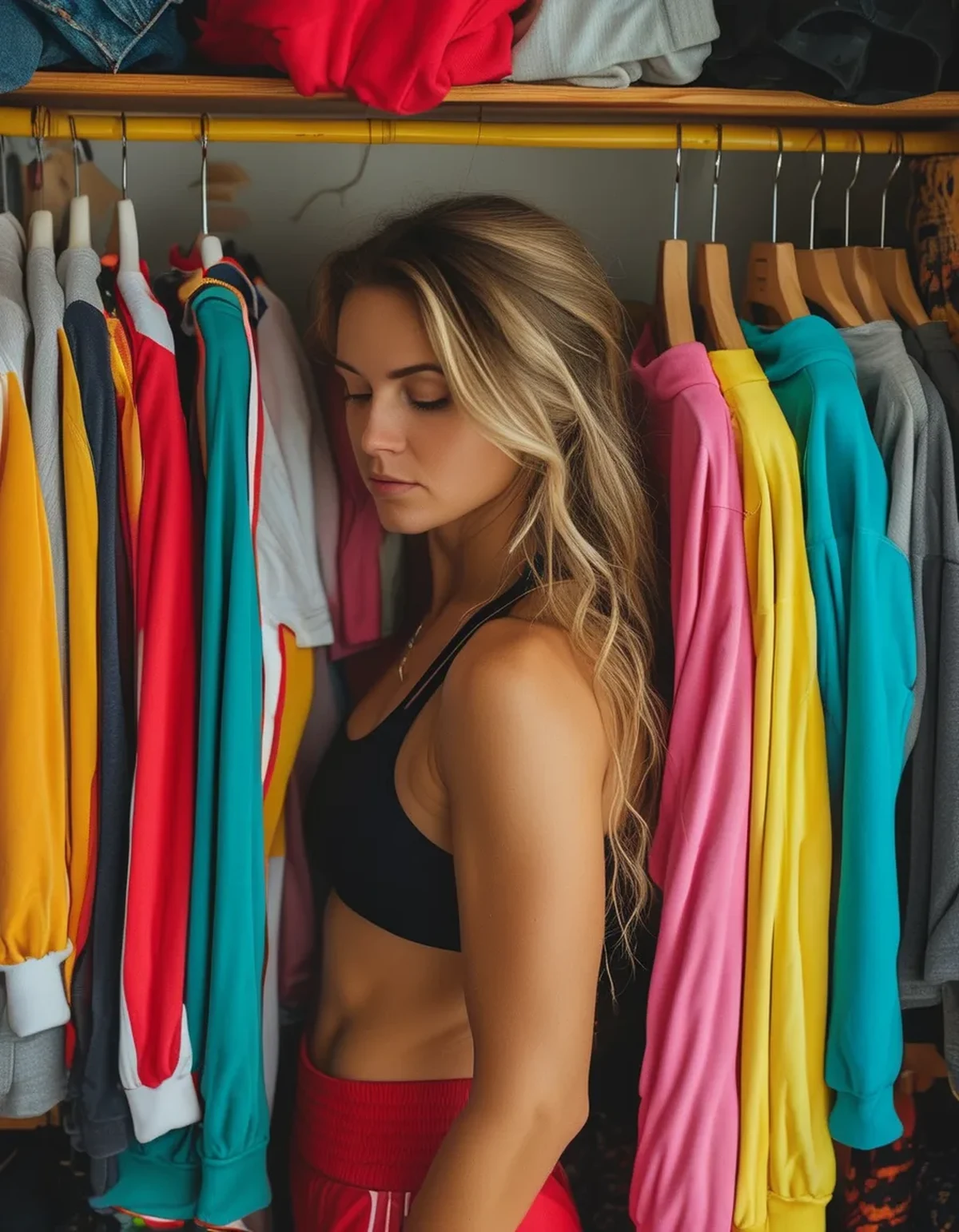
You bought activewear that looked and felt great in the store, and then overheated in a HIIT class or froze during a slow outdoor walk. The fabric wasn’t wrong — it was likely matched to the wrong activity.
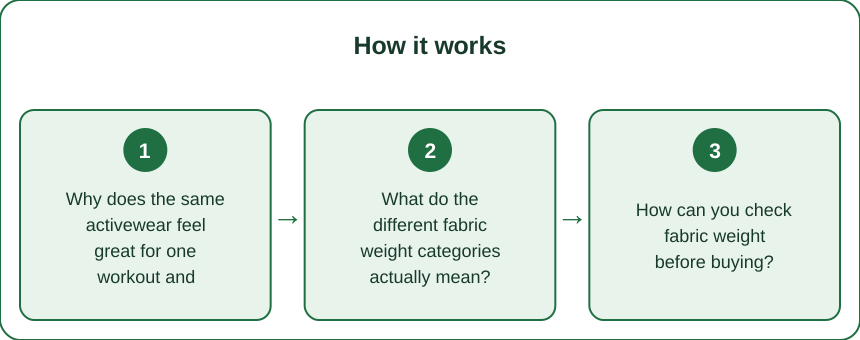
Why does the same activewear feel great for one workout and terrible for another?
Fabric weight determines how much heat and moisture the material traps against your skin — a fabric that’s ideal for a low-sweat activity like walking can feel suffocating during a high-intensity session where heat and sweat output are much higher.
This is a mismatch problem, not a quality problem — the same well-made legging can be the right or wrong choice purely based on what activity it’s paired with.
What do the different fabric weight categories actually mean?
Lightweight (roughly under 180 GSM) prioritizes breathability and quick-dry performance, ideal for hot yoga, running, or HIIT where heat buildup is the main concern.
Midweight (180-280 GSM) balances structure and breathability, working for general strength training, Pilates, or moderate cardio.
**Heavier fabric (280+ GSM) prioritizes structure, opacity, and warmth retention, better suited to low-intensity activity, layering, or cooler-weather outdoor wear where you’re not generating heavy heat output.
How can you check fabric weight before buying?
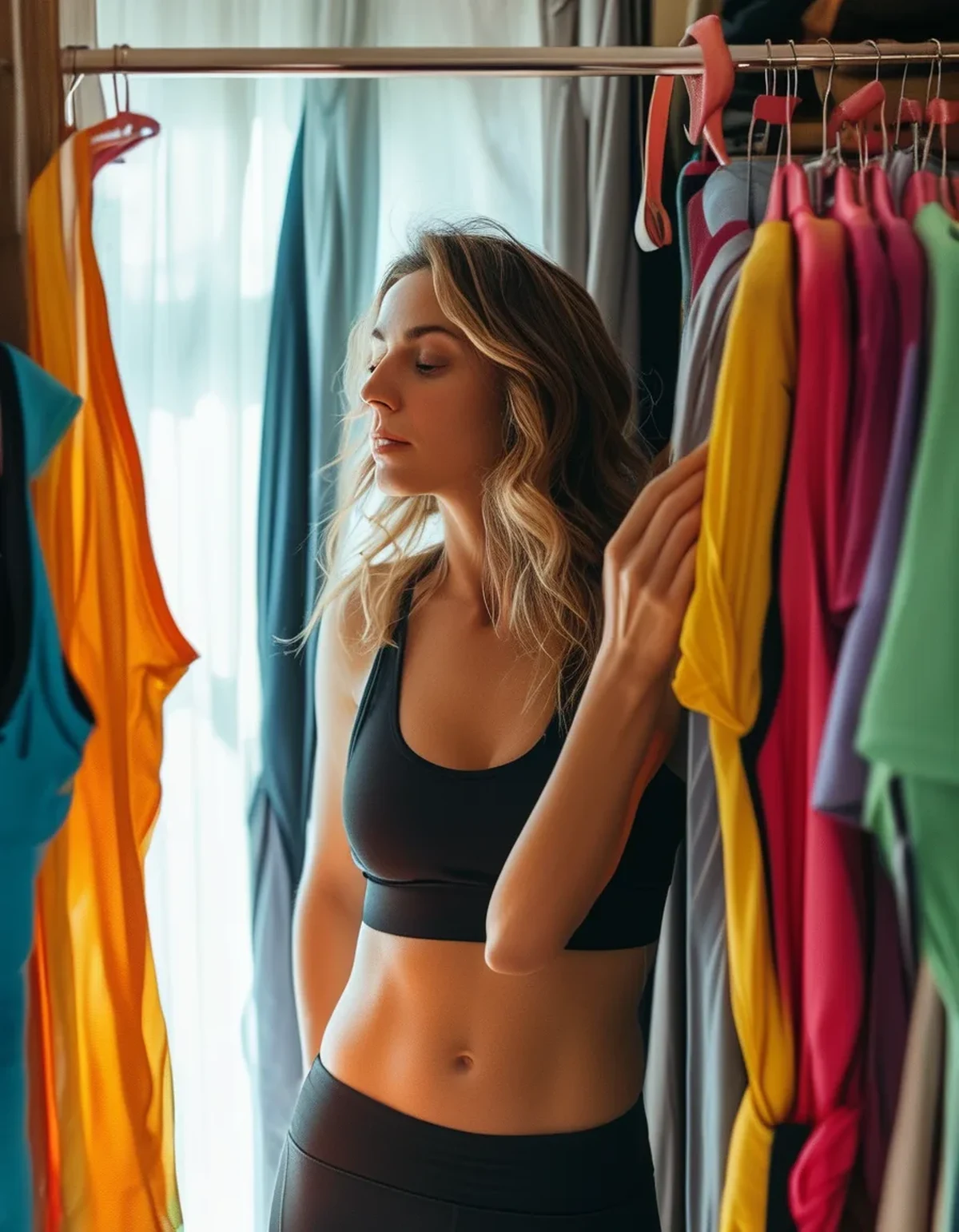
Most activewear brands list GSM in the product details, and if it’s not listed, fabric thickness and opacity when stretched (hold it up to light) give a reasonable visual proxy.
As a rule of thumb: if you can easily see through the fabric when stretched, it’s likely lightweight; if it holds its shape and stays opaque under stretch, it’s midweight or heavier — useful when GSM numbers aren’t available.
Does this matter for tops as much as bottoms?
Yes, arguably more — tops sit closer to your core body heat and sweat glands, so a heavyweight top in a high-intensity session traps significantly more heat than a heavyweight bottom would in the same workout.
A practical approach many people use: match your top’s weight to activity intensity first, and treat bottoms as slightly more flexible, since leg sweat and heat buildup tend to be less extreme than core/torso heat during most training.
FAQ: Activewear Fabric Weight, Answered
Is heavier fabric always higher quality?
No — weight and quality are separate properties. A well-made lightweight fabric can outperform a poorly made heavy one; weight should be chosen for activity fit, not as a quality signal.
Can I use midweight fabric for everything to avoid the guesswork?
It’s a reasonable default for general training, but you’ll likely still overheat in very high-intensity sessions or feel underdressed in cold-weather low-intensity activity — it’s a compromise, not a universal fix.
Does fabric weight affect how long activewear lasts?
Somewhat — heavier fabrics often show wear more slowly under regular use, but proper care (see-through stretching, washing, drying method) affects longevity more than weight alone.
TL;DR:
- Fabric weight (GSM) needs to match activity intensity, not just personal style preference
- Lightweight (under 180 GSM) for high-heat cardio, midweight for general training, heavier for low-intensity or cold
- Check GSM in product details, or use the light-stretch-test as a proxy
- Tops matter more than bottoms for heat regulation — prioritize matching weight there first
Next time something feels wrong mid-workout, check the fabric weight against the activity before blaming the fit.
Keep Reading
This article is for general informational and styling purposes only. Fit, sizing, and product availability may vary.