Which Activewear Fabrics Actually Resist Pilling? Here's What the Label Doesn't Tell You
Quick Answer: Tightly woven, high-denier synthetic blends (nylon-spandex over polyester-spandex) resist pilling best; loosely knit cotton blends and low-denier polyester pill fastest, especially in high-friction zones like inner thighs.
Pilling isn’t just about how often you wash something — the fabric’s own structure decides most of the outcome before it ever hits the washing machine.

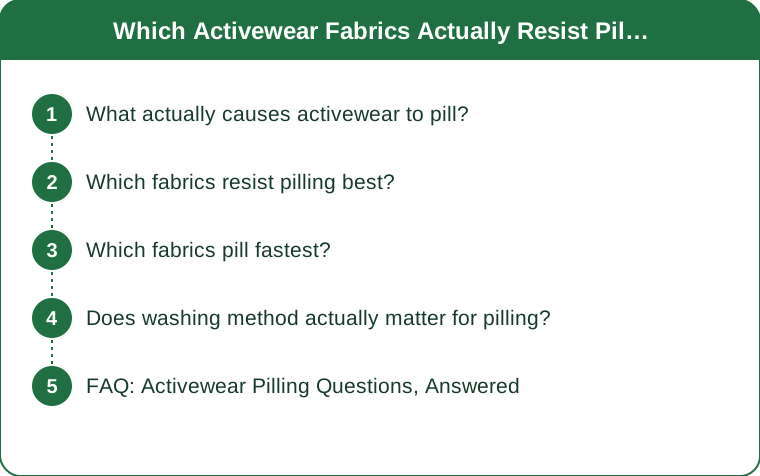
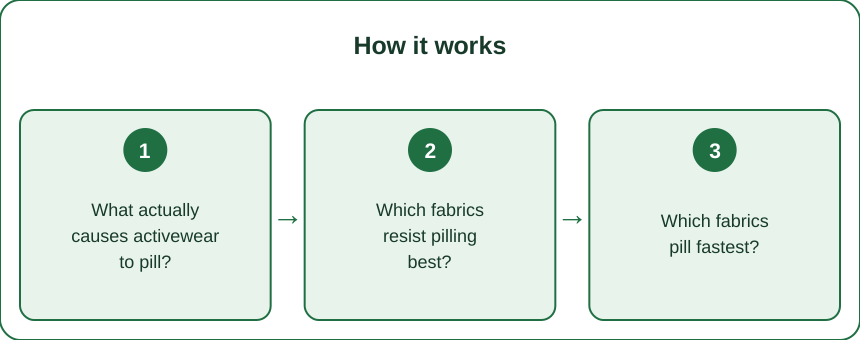
What actually causes activewear to pill?
Pilling happens when friction breaks short fibers loose from the fabric surface, and those broken fibers tangle into small balls instead of falling away. Loosely woven or lower-quality knit fabrics have more loose fiber ends available to break free, which is why pilling concentrates in high-friction zones like inner thighs, underarms, and wherever fabric rubs against fabric or equipment repeatedly.
Which fabrics resist pilling best?
Nylon-spandex blends generally outperform polyester-spandex for pill resistance since nylon fibers are inherently stronger and longer, breaking loose less easily. Higher-denier fabrics (a measure of fiber thickness) also resist pilling better than thin, lightweight versions of the same fabric type, which is part of why cheaper, thinner leggings often pill faster than premium ones even in the same material family.

Which fabrics pill fastest?
Cotton-poly blends, especially looser knit styles, pill notably faster than tighter synthetic weaves — cotton’s shorter natural fibers break loose more easily than continuous synthetic filaments. Budget polyester blends with low denier ratings are the other common fast-pilling category, since thin fibers simply have less structural integrity to resist friction.
Does washing method actually matter for pilling?
Yes, significantly — washing activewear inside-out, using a mesh laundry bag, and avoiding high heat in the dryer all reduce the friction that causes pilling, regardless of the fabric type. Fabric choice sets your starting resistance; washing habits determine how fast you use it up.
FAQ: Activewear Pilling Questions, Answered
Does higher price always mean less pilling?
Not always directly, but higher-price activewear more often uses higher-denier, tighter-weave synthetic fabric, which does correlate with better pill resistance — check the fabric composition specifically rather than trusting price alone.
Can pilled activewear be fixed?
A fabric shaver or pilling comb removes existing pills reasonably well, though it doesn’t restore the broken fiber structure — pilling in the same spot tends to return, especially in high-friction zones.
Is cotton activewear always going to pill more than synthetic?
Generally yes — cotton’s shorter fiber structure is inherently more pill-prone than continuous synthetic filaments, regardless of blend percentage or price point.
TL;DR:
- Pilling comes from friction breaking loose fibers, concentrated in high-friction zones
- Nylon-spandex and high-denier fabrics resist pilling best
- Cotton blends and thin, low-denier polyester pill fastest
- Washing inside-out in a mesh bag reduces pilling regardless of fabric
Check the fabric composition tag before buying if pilling has been a recurring frustration — it’s a bigger factor than most people realize.
See It in Motion
Seen here: High Waist Yoga Leggings with Inner Pocket — shop it on bubblelime.com
Keep Reading
This article is for general informational and styling purposes only. Fit, sizing, and product availability may vary.