Why the Same Kit Feels Different Indoors and Outdoors at the Same Temperature
Quick Answer: Air temperature is only one of four variables. Air movement strips heat far faster outdoors, radiant loss to a cold sky or cold walls pulls heat from you without any wind at all, humidity decides whether your sweat can evaporate, and your own pace changes between environments. The same 12°C can feel like 6°C on a windy outdoor run and like 18°C in a still gym - which is why the kit that works in one fails in the other.
Here is what each mechanism does and how to dress for the difference.
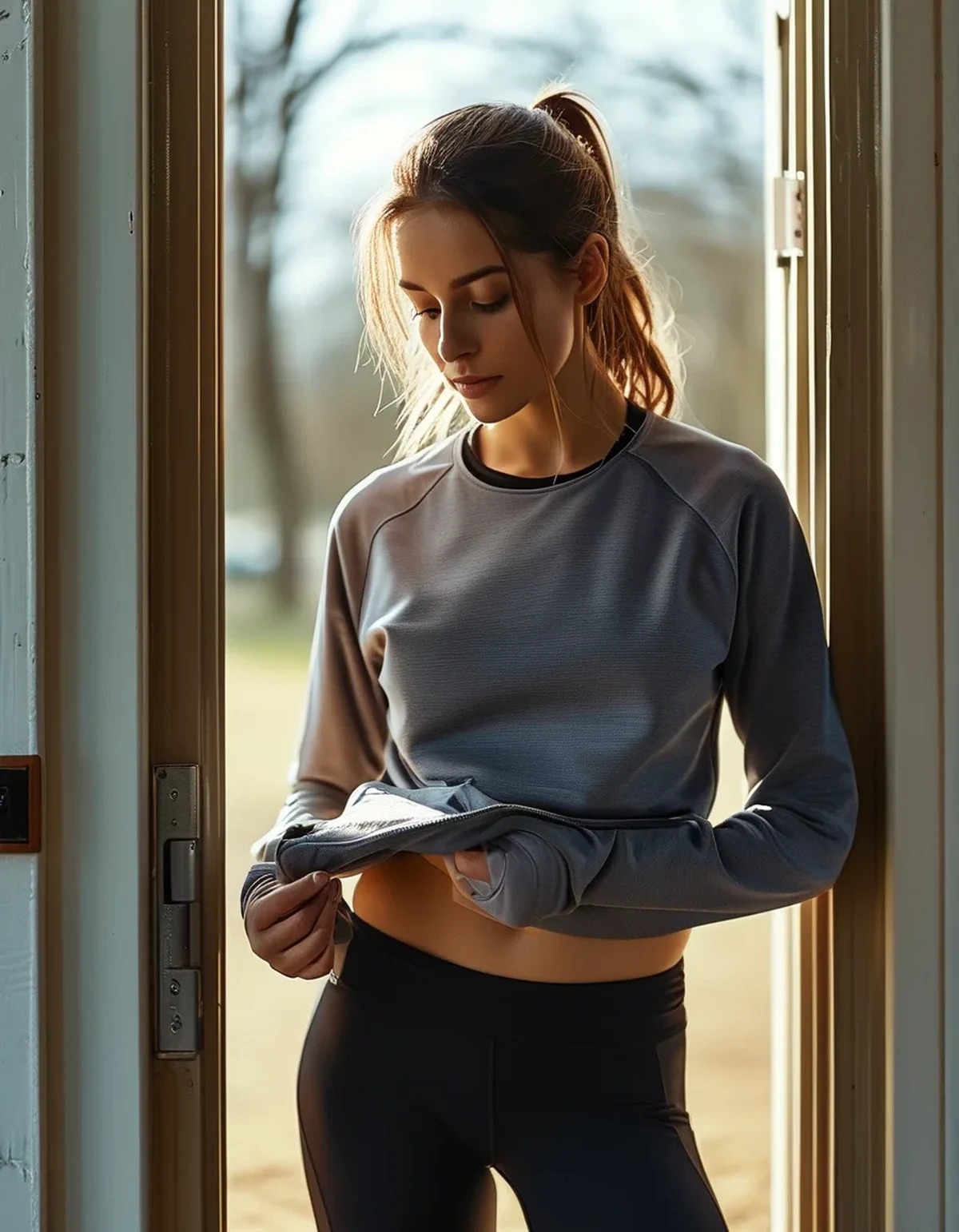
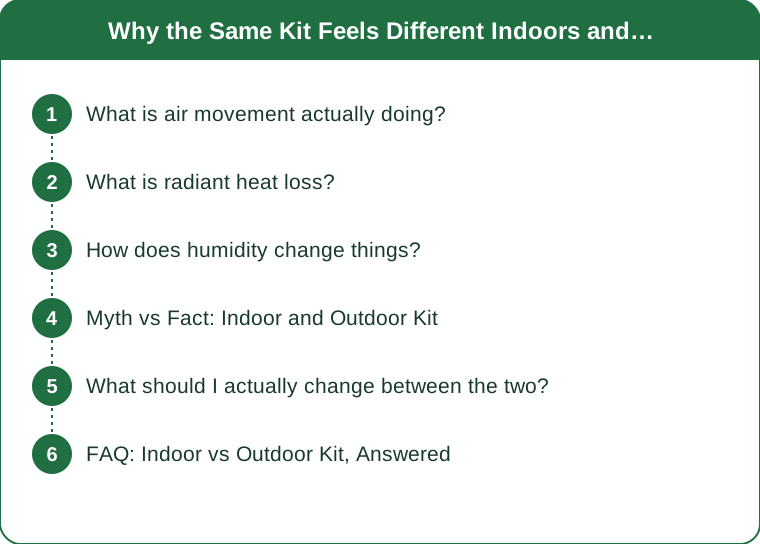
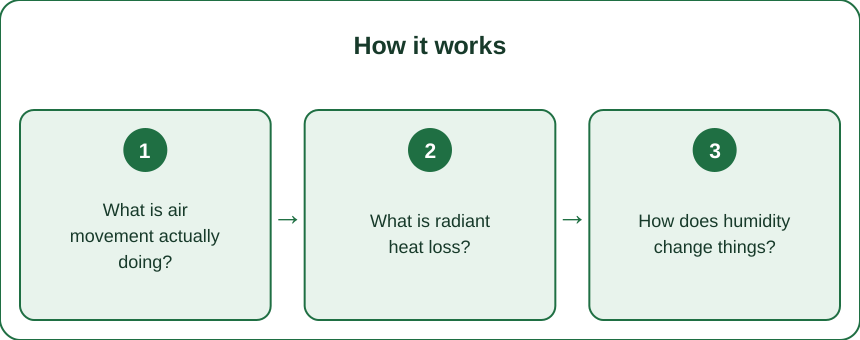
What is air movement actually doing?
Moving air strips the warm boundary layer off your skin and clothing. Still air lets a thin insulating layer of warmed air sit against you; wind removes it continuously and replaces it with cold air.
Your own speed counts as wind. Running at 10km/h into still air creates 10km/h of apparent wind, so an outdoor runner is always experiencing more air movement than a treadmill runner at identical pace.
Indoor spaces have almost none. A gym has some ventilation, but the air movement is a fraction of even a light outdoor breeze, so your boundary layer stays intact and you feel much warmer.
This is why wind resistance matters more than insulation outdoors. A thin windproof shell often does more than a much thicker fleece, because it protects the boundary layer rather than adding to it.
And it explains the classic autumn mistake. People dress for the temperature on the forecast, step into a headwind, and are cold in kit that would have been perfect indoors. Check wind speed, not just temperature.
What is radiant heat loss?
You radiate heat toward anything colder than you, with no air movement required. A clear cold sky is a very effective heat sink, and you lose heat to it directly.
This is why a clear night feels colder than a cloudy one at the same temperature. Cloud cover reflects radiant heat back; a clear sky does not. The difference is genuinely noticeable.
Indoors, the walls are near room temperature, so radiant loss is minimal. A gym at 12°C would feel considerably warmer than 12°C outdoors even with zero wind, purely from this.
Cold surfaces indoors do the same thing on a smaller scale. Training next to a large single-glazed window or an uninsulated external wall in winter produces a noticeable cold side, which people usually attribute to a draught.
And it works in reverse in sun. Direct autumn sun adds significant radiant heat, so a sunny 10°C outdoors can feel warmer than an overcast 15°C - which is why the same kit works on Tuesday and fails on Wednesday.
How does humidity change things?
Sweat cools you by evaporating, and evaporation needs somewhere for the moisture to go. High humidity means slower evaporation and therefore worse cooling at any temperature.
Indoor gyms are often more humid than they feel, particularly busy ones and especially studios. The same effort produces more accumulated sweat and the fabric stays wetter.
Wet fabric conducts heat away from you far faster than dry fabric - by a wide margin. This is the mechanism behind getting cold after stopping, and it is worse outdoors where wind then strips the heat from the wet layer.
Cotton is the specific failure here. It absorbs and holds moisture rather than moving it, so a cotton layer that felt fine indoors becomes an actively cooling wet layer the moment you step outside.
And this is what makes the post-session walk home dangerous for comfort in autumn. You are damp, you have stopped generating heat, and you have moved into wind. All three at once, which is why a dry layer for afterwards matters more than any layer you train in.
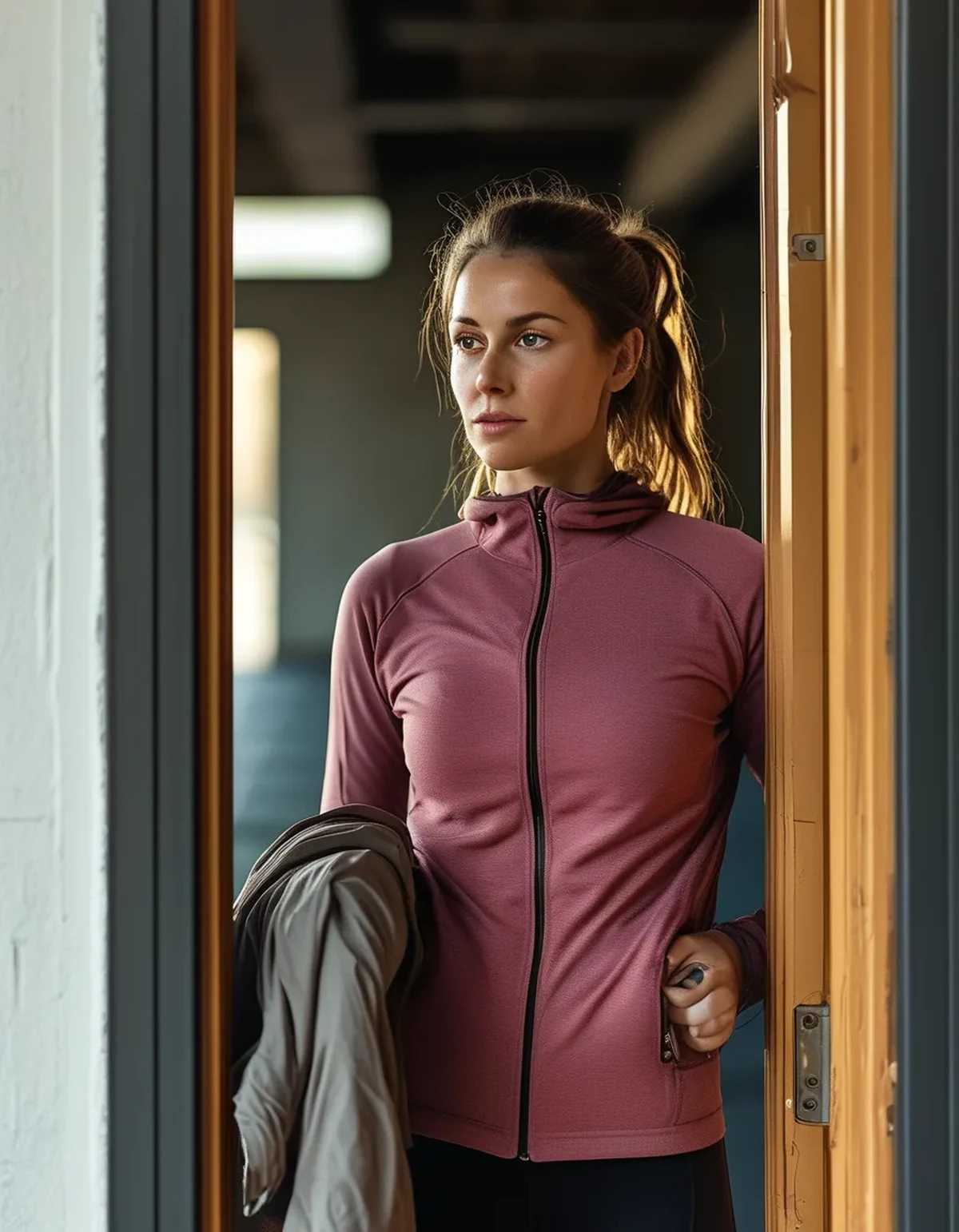
Myth vs Fact: Indoor and Outdoor Kit
Myth: if you know the temperature, you know what to wear. Fact: temperature is one of four variables. Wind, radiant conditions, and humidity between them can shift perceived temperature by 10 degrees or more in either direction.
Myth: you should dress for how it feels when you step outside. Fact: dress for how you will feel ten minutes in. The standard guidance is to feel slightly cool at the start - if you are comfortable standing still, you will overheat once moving.
Myth: thicker is warmer outdoors. Fact: wind resistance usually matters more than thickness. A thin windproof shell over a light base outperforms a thick fleece alone in most autumn conditions.
Myth: indoor training needs no layering strategy. Fact: indoor sessions with intervals or long rests need a layer for the rest periods. Getting cold between sets is a real problem in cool gyms, and it is the same mechanism as outdoors.
Myth: moisture-wicking fabric solves everything. Fact: wicking moves moisture to the surface, where it still needs to evaporate. In high humidity or under a non-breathable shell, it has nowhere to go and you stay wet.
Myth: you need a completely different wardrobe for each. Fact: the base layers are the same. What changes is the outer layer and the after layer - a wind shell and a dry top to change into cover most of the gap.
What should I actually change between the two?
Outdoors, add wind protection rather than insulation. A lightweight windproof shell, ideally with a full zip so you can vent, is the highest-value item for autumn training by a considerable margin.
Indoors, plan for the rest periods. A light long-sleeve to put on between sets or during a long cooldown prevents the between-sets chill that makes cool gyms unpleasant.
Cover the extremities outdoors first. Hands, ears, and head lose heat disproportionately and are cheap to cover. Gloves and a headband do more for perceived warmth than a heavier top.
Always carry a dry layer for afterwards outdoors. Changing the top layer immediately after stopping is the single most effective comfort measure in autumn and winter, and it prevents the walk-home chill entirely.
Use the same base layer for both. A technical base is correct in either environment, and cotton is wrong in both - just more obviously wrong outdoors.
And re-check as the season turns. The kit that worked at the end of August will not work at the end of September, and the change is usually about wind and radiant loss rather than the temperature dropping - which is exactly why people are caught out by it every year.
FAQ: Indoor vs Outdoor Kit, Answered
Why does the same temperature feel so much colder outside?
Air movement strips the warm boundary layer off your skin, and you radiate heat directly to a cold sky. Indoors, neither happens - the air is still and the walls are near room temperature.
Should I dress for the temperature or the wind?
Both, and wind often matters more. Check the wind speed as well as the temperature - a light breeze can shift perceived temperature by several degrees.
How should I feel when I step outside?
Slightly cool. If you are comfortable standing still at the start, you will be too warm within ten minutes of moving.
Why do I get so cold after an outdoor session?
You are damp, you have stopped producing heat, and wet fabric conducts heat away far faster than dry. Change your top layer immediately - it is the most effective thing you can do.
Is a windproof jacket better than a thicker fleece?
Usually yes, for autumn conditions. Protecting the boundary layer of warm air around you does more than adding insulation that wind blows straight through.
Do I need different kit for the gym?
The base layers are the same. What changes is that indoors you may need a layer for rest periods, and outdoors you need wind protection and something dry for afterwards.
Why does a sunny cold day feel warmer than a mild overcast one?
Direct sun adds significant radiant heat. A sunny 10°C can genuinely feel warmer than an overcast 15°C, which is why identical kit works one day and fails the next.
TL;DR:
- Four variables, not one: air movement, radiant loss to sky or walls, humidity, and your own pace.
- Your speed is wind. An outdoor runner always experiences more air movement than a treadmill runner at the same pace.
- You radiate heat to a clear cold sky with no wind at all - which is why clear nights feel colder than cloudy ones.
- Wind protection beats insulation outdoors. A thin windproof shell outperforms a thick fleece in most autumn conditions.
- Indoors, plan for rest periods - a light layer between sets solves the cool-gym problem.
- Wet fabric conducts heat away fast. A dry top to change into afterwards is the highest-value autumn item.
- Same base layer for both. Cotton is wrong in either, just more obviously outdoors.
Check wind speed alongside temperature. That single habit prevents most autumn kit mistakes.
Keep Reading
This article is for general informational and styling purposes only. Fit, sizing, and product availability may vary.