Why You Need Fewer Layers Than You Think for Cold Weather Training
Quick Answer: Working muscles generate a large amount of heat, and after ten to fifteen minutes you are functioning as though the air were significantly warmer than it is. Dressing to feel comfortable at the start means being too hot once you are working, and overheating leads to sweat soaked layers that then chill you badly when you stop. The standard guidance is to dress for conditions about ten to twenty degrees warmer than the thermometer reads, and to feel slightly cold for the first few minutes.
If you are comfortable when you set off, you are overdressed.
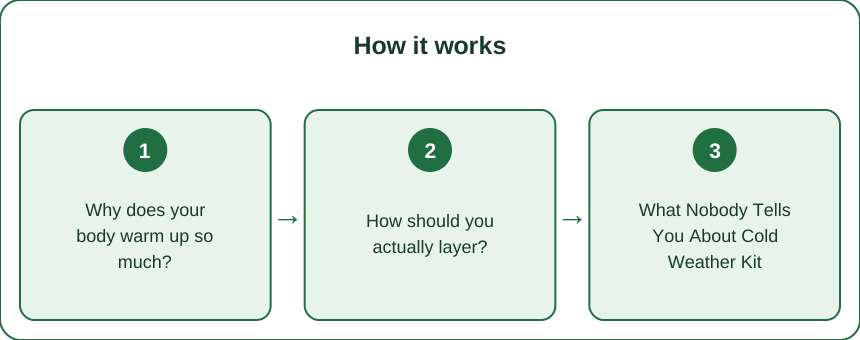
Why does your body warm up so much?
Because muscle work is thermally inefficient, and most of the energy comes out as heat.
When you exercise, only a small proportion of the chemical energy used becomes mechanical work, and the large remainder becomes heat. Your core temperature rises quickly, and your body has to shed that heat continuously to keep functioning.
The result is that the effective temperature you experience while working is considerably higher than the air temperature. This is why the widely used guideline is to dress for something like ten to twenty degrees Fahrenheit warmer than the actual conditions.
The consequence of ignoring it is not just discomfort. Overdressing leads to heavy sweating, and wet clothing conducts heat away from the body far faster than dry clothing. In cold conditions that becomes a real problem the moment you slow down or stop, and it is why people who overdress often end up colder than people who dressed lightly.
There is a timing element worth understanding. The first five to ten minutes genuinely are cold, and this is where the mistake is made. You step outside, feel the temperature, and add a layer to solve a problem that is about to solve itself.
A useful mental rule: dress so that you feel slightly cold standing at the door. Uncomfortable for a few minutes, correct for the following hour.
How should you actually layer?
By function rather than by count, with each layer doing one job.
Base layer: moves moisture. This is the most important piece and the one people spend least on. A synthetic or merino base moves sweat away from the skin; cotton absorbs and holds it, which is why cotton is genuinely dangerous in cold conditions rather than just uncomfortable. Fitted rather than loose, so it makes contact.
Mid layer: insulates, and is often unnecessary. A light fleece or a long sleeved technical top, needed only when it is genuinely cold or when the effort is low. For most moderate autumn training this layer is what people add unnecessarily.
Outer layer: blocks wind and rain. Wind is a much larger factor than temperature, and a light windproof shell adds enormous effective warmth for very little weight. A wind shell over a base layer covers a wide range of conditions on its own.
Rough guidance by temperature, for a moderate effort:
Above 50 degrees Fahrenheit: shorts or tights and a single long sleeved layer, often just a t shirt.
40 to 50: long sleeved base layer, tights, and possibly light gloves.
30 to 40: base layer plus a wind shell, tights, gloves, and something covering the ears.
Below 30: add a mid layer, better gloves, and cover more of the face and neck.
Adjust for wind, rain, and how hard you are working. A hard interval session needs less than an easy recovery jog at the same temperature, and this catches a lot of people out.
What Nobody Tells You About Cold Weather Kit
Extremities matter more than your torso. Blood flow is prioritised to the core, so hands, ears, and feet get cold first. Gloves and a headband deliver more comfort per gram than any additional torso layer, and they are easy to remove and pocket.
Wind chill is the real number. A 40 degree day with a strong headwind feels far colder than a still 32 degree one, and it strips heat much faster. Check wind before deciding on layers, and plan routes to finish with the wind behind you rather than into it.
Getting wet changes everything. Rain plus wind plus cold is the combination that produces genuine hypothermia risk, and it is far more dangerous than dry cold. A waterproof shell matters more in autumn than a warm one.
The end of a session is the danger point. You stop producing heat, your clothes are damp, and you cool very fast. Have a dry layer for immediately afterwards, particularly if you have any distance to travel home.
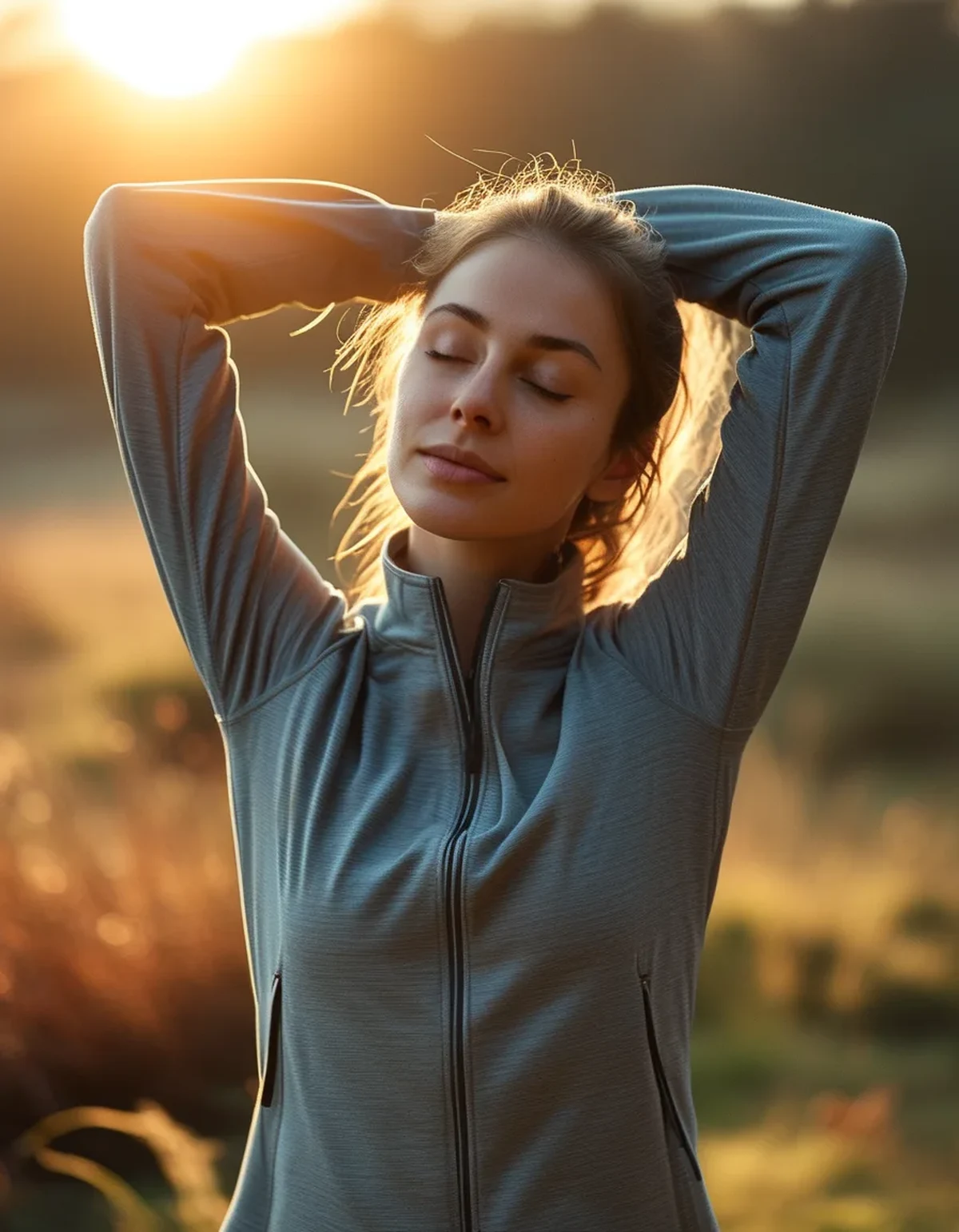
Zips are the best temperature control there is. A half zip lets you regulate continuously without stopping, which is more useful than owning more garments.
Dark clothing plus dark evenings is a safety issue, not a style one. Reflective elements and a light become necessary well before it feels properly dark.
How should you handle the transition right now?
This is the most variable period of the year for dressing, and it is the one where people get it wrong most often.
Temperature swings across a single day are large in autumn. A morning session can start near freezing and finish in mild sunshine, and a session at the same time two weeks apart can differ enormously. The kit that was correct last Tuesday may be wrong today, which is why habits formed in stable summer weather fail now.
What to do about it specifically:
Prioritise adjustability over insulation. Half zips, removable gloves, a headband rather than a hat, and a shell that packs into a pocket. The goal for autumn is a kit you can modify mid session, rather than one perfect combination.
Check wind and rain rather than temperature alone. They matter more than the number, and they change faster.
Expect the first cold morning to catch you out. It always does, and it is worth getting the autumn kit out of storage now rather than on the morning you need it.
Reassess when the clocks change. Sessions that were in daylight move into dark, which changes both what you need to be seen and how cold the air is at that hour.
Layer for the second half of the session. If it is getting colder through the evening, or you will slow down at the end, factor that in rather than dressing for the first ten minutes.
Keep a dry top and something warm in the car or by the door. The post session chill is the most under prepared for part of autumn training.
A safety note worth taking seriously: hypothermia risk rises sharply when you are wet, windblown, and no longer generating heat, which is exactly the situation of someone who has finished a session in cold rain far from home. If you are training in genuinely cold or remote conditions, carry more than you expect to need, and if you have a heart condition or any medical issue affected by cold, talk to your doctor about exercising in it. This is general kit guidance rather than medical advice.
FAQ: Cold Weather Training Layer Questions, Answered
How cold should I feel when I start?
Slightly cold, to the point of being mildly uncomfortable standing at the door. If you feel comfortable before you start moving, you will be too warm within about ten minutes.
Is cotton really that bad?
In cold conditions, yes. It absorbs sweat and holds it against your skin, and wet fabric pulls heat away from your body dramatically faster than dry fabric does. Synthetic or merino for anything against the skin.
Do I need a jacket or a mid layer first?
A wind shell, in most cases. Wind is the larger factor for most autumn conditions, and a light windproof over a base layer covers a wide temperature range for very little weight.
What about after the session?
Change out of damp layers as soon as you can, and have something dry ready. The post session cool down is when most people actually get cold, and it is the easiest part to prepare for.
TL;DR:
- Exercise generates a lot of heat, so dress for conditions roughly ten to twenty degrees warmer than the thermometer says.
- Feeling slightly cold at the door is correct; feeling comfortable means you will overheat and end up in soaked layers.
- Layer by function — moisture moving base, optional insulation, wind shell — and prioritise extremities and zips over bulk.
- Autumn swings are large, so choose adjustable kit and keep a dry layer for straight after the session.
Next cold morning, take off the layer you were about to add and set off slightly cold. By the first mile you will be glad.
Keep Reading
This article is for general informational and styling purposes only. Fit, sizing, and product availability may vary.